
Calcium Chloride – PELADOW™, DOWFLAKE Xtra™ & Liquid Calcium Chloride (LIQUIDOW™)
CALCIUM CHLORIDE
Snow and Ice
PELADOW™ Ice Penetration (at 20 degrees F):
- 2X faster than NaCl
- 2X faster than MgCl2
- 3X faster than Urea
- 3X faster than KCl
- 14X faster than CMA
PELADOW™ Melting Speed (at 20 degrees F):
- 2X faster than NaCl
- 3X faster than MgCl2
- 3X faster than Urea
- 7X faster than KCl
- 13X faster than CMA
DOWFLAKE™ Xtra Ice Melt Volume (at 20 degrees F):
- 33% faster than NaCl
- 27% faster than MgCl2 flake
- 2X faster than Urea
- 5X faster than KCl
- 9X faster than CMA
- Conventional 77-80 percent flake melts 7.7 pounds of ice per pound used. DOWFLAKE™ Xtra 83-87 melts 8.5 pounds of ice per pound used.
Dust Control
DOWFLAKE™ Xtra
DOWFLAKE™ Xtra 83-87 percent calcium chloride flake goes the extra mile for better dust control. With approximately 10 percent more calcium chloride than conventional 77 percent calcium chloride flake products, DOWFLAKE™ Xtra gives you greater pound-for-pound dust control than competing calcium chloride formulations and other materials.
DOWFLAKE XTRA is hygroscopic, drawing moisture from the air, eliminating the need to mix it with water.
Oxy calcium chloride outperforms all other materials for dust control:
- Providing similar performance-but requires less than half the application rate-to magnesium chloride, thereby significantly reducing your costs.
- Doesn’t form a crust or fragment under traffic like some oils and emulsions.
- Has greater, more predictable performance and less environmental impact than natural and processed brines.
- Has a slower evaporation rate than surfactants and water, which evaporate too quickly to be effective.
LIQUIDOW™ Calcium Chloride Solution
LIQUIDOW™ Calcium Chloride Solution is produced from a naturally-occurring, underground brine that has been refined to remove impurities. LIQUIDOW™ outperforms alternative dust control materials.
- Doesn’t form a crust or fragment under traffic like some oils and emulsions.
- Requires a lower application rate than magnesium chloride.
- Doesn’t become slippery when wet or brittle when dry like lignin sulfonate.
- Has fewer impurities and more predictable performance than unprocessed brines.
The performance, residual stabilizing effects and cost effectiveness of LIQUIDOW™ calcium chloride solution provides substantial advantages over competing products in dust-control applications.
CALCIUM CHLORIDE (CaCl2)
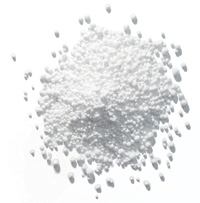
- Melts to -25° F
- Is the fastest, most effective ice melt available
- Premium-priced, similar to magnesium chloride, but pound-for-pound, melts twice as much ice
- Comes in pellet or flake form
- Is hygroscopic, drawing moisture from the air and creating heat to accelerate the melting process
- Vegetation, corrosion and concrete performance compares favorably to competing ice-melt materials, including magnesium and potassium chloride.
PELADOWTM Premier Ice-Melt – The Best on Ice
 No other ice-melt product works on snow and ice better than PELADOW™ Calcium Chloride Pellets. Comparative performance tests and scientific research prove that it’s the premier choice for ice melt. With its fast melting action and cold-temperature performance, PELADOW™ calcium chloride is easily distinguished from other ice melters because it:
- Contains more than 90 percent calcium chloride, the most effective material for melting ice and snow.
- Melts ice 2 to 13 times faster than other ice-melt materials.
- Absorbs moisture and generates heat to speed melting.
- Penetrates through ice 2 to 14 times faster than competing materials.
- Performs in a wider range of winter temperatures, even extreme cold.
- Provides peace of mind by making steps, walks, driveways and parking lots safer.
- Ensures the same vegetation, corrosion and concrete performance as other ice-melt formulations, including magnesium chloride, potassium chloride and rock salt.
PELADOW™ calcium chloride outperforms other ice formulations in all winter conditions. For example, in the first 20 minutes at 20°F, PELADOW™ pellets melt:
- 2X faster than NaCl
- 3X faster than MgCl2
- 3X faster than Urea
- 7X faster than KCl
- 13X faster than CMA
While competing products stop working at 0°F, PELADOW™ pellets keep working even when the temperature plummets to -25°F, the lowest effective temperature of any ice-melt product.
DOWFLAKETM Xtra 83-87 percent calcium chloride: “Xtra” Concentration for “Xtra” Ice-Melting Speed
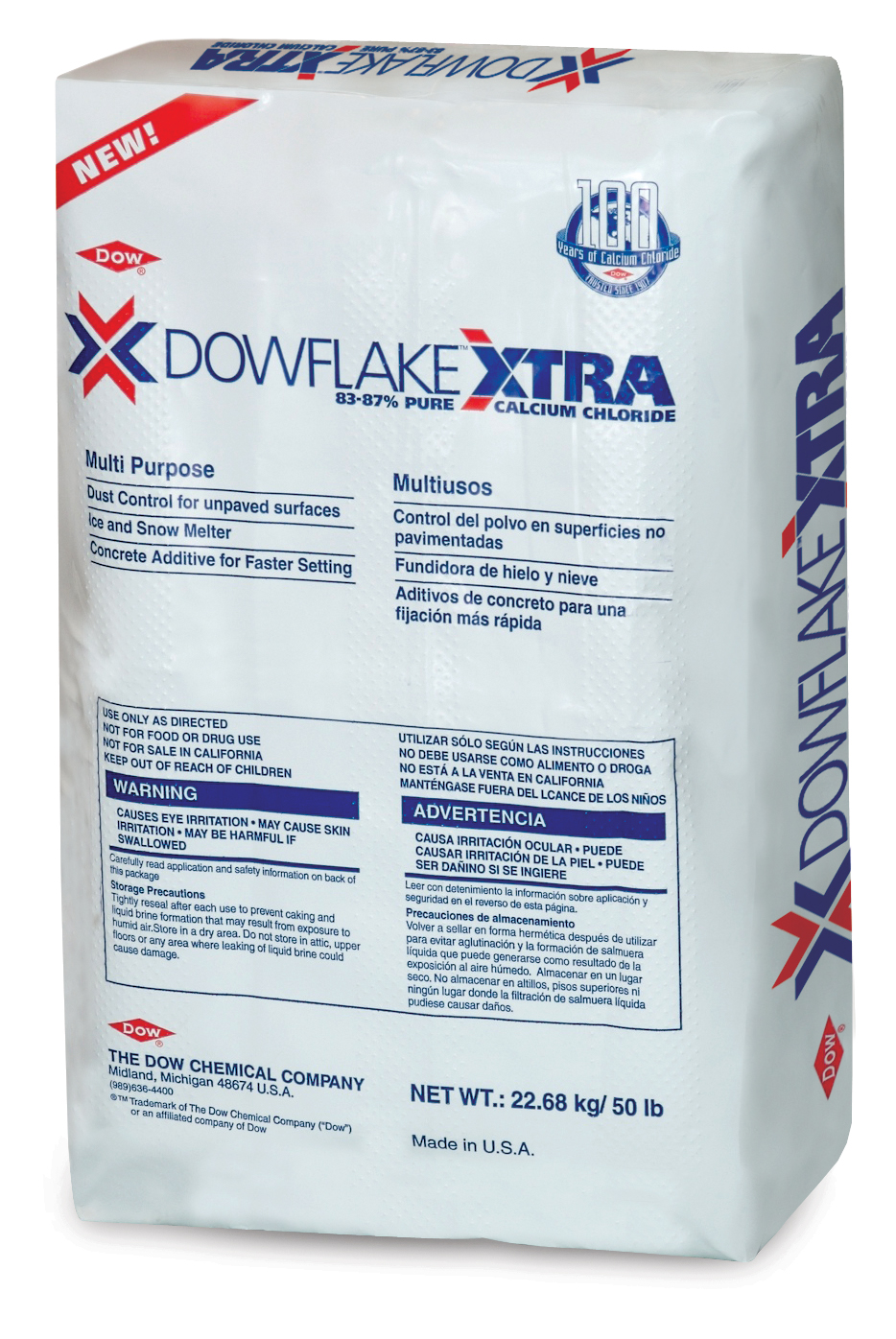 DOWFLAKE™ Xtra 83-87 Percent Calcium Chloride. has 10 percent more calcium chloride than conventional flake calcium chloride products. It’s concentrated, so you can apply less.
Use DOWFLAKE™ Xtra calcium chloride by itself or mix it with rock salt and abrasives to give them extra power.
Calcium chloride’s high-performance properties make it superior to plain salt and other ice-melting materials.
DOWFLAKE™ Xtra calcium chloride:
- Works across a wider range of temperatures than other ice melting materials.
- Works much faster than rock salt alone.
- Melts ice faster and at lower temperatures than urea and potassium chloride.
- Melts ice faster than magnesium chloride, which means that more magnesium chloride-at added cost-is needed to match the performance of DOWFLAKE™ Xtra calcium chloride.
- Here’s the performance comparison. DOWFLAKE™ Xtra melts ice:
- 33% faster than NaCl
- 27% faster than MgCl2 flake
- 2X faster than Urea
- 5X faster than KCl
- 9X faster than CMA
Conventional 77-80 percent flake melts 7.7 pounds of ice per pound used. DOWFLAKE™ Xtra 83-87 melts 8.5 pounds of ice per pound used.
DOWFLAKE™ Xtra calcium chloride provides additional benefits when it is mixed with other materials. It helps:
- Make rock salt work faster and at lower temperatures.
- Keep abrasives like sand and cinders manageable and free flowing at cold temperatures.
- Imbed abrasives in ice to prevent them from being bounced off the surface by traffic.
- Whether used by itself, with rock salt, or with abrasives, DOWFLAKE™ Xtra calcium chloride not only melts quicker, it also makes it easier for you to mechanically remove snow and ice by penetrating and loosening it.